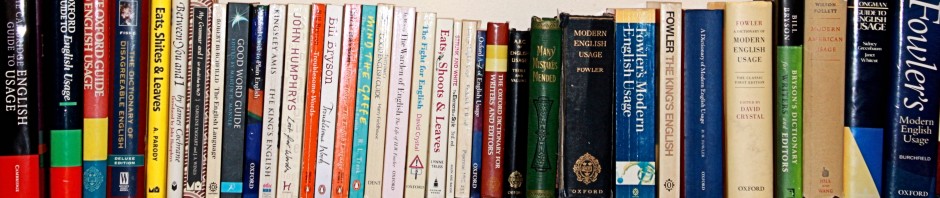
 Looking through usage guides makes me notice prescriptions that haven´t quite ‘taken’. Especially older usage guides can be an amusing source of these. These prescriptions, in addition to prescribing current usage, often also give a prediction for future usage.
A while ago, I was going through Walton Burgess’s Five Hundred Mistakes of Daily Occurrence in Speaking, Pronouncing, and Writing the English Language, Corrected (1856) and I noted some of these predictive prescriptions. To start with, these are some words that are now pronounced in the ‘wrong’ way:

No. 23. “I prefer the yolk of an egg to the white:” the more common word is yelk, with the l sounded; but if yolk be used, it should be pronounced like yoke.
No. 309. “Let me help you to some catsup:” avoid saying ketchup.
No. 312. “We poled the raft up the creek:” pronounce as if written krik.
No. 391. “Gibbon wrote the Rise and Fall of the Roman Empire:” pronounce Rise, the noun, so as to rhyme with price; Rise, the verb, rhymes with prize.
The words afraid and by we now commonly use with the ‘wrong’ meaning, according to Burgess:
No. 387. “I am afraid it will rain:” say, I fear. Afraid expresses terror; fear may mean only anxiety.
No. 457. “ He was killed by a cannon-ball,” should be, He was killed with a cannon-ball. He was killed by the cannoneer.
And these are some other incorrect usages, now in daily use as correct:
No. 14. “It is an error; you are mistaken:” say, you mistake. Mistaken means misapprehended; “you mistake” means “you misapprehend.”
No. 100. “Victoria is Queen of the United Kingdom:” say, United Kingdoms. Who ever speaks of the United State of America?
No. 203. “Give me both of those books:” leave out of.
No. 490. Do not use to, the sign of the infinitive mood, for the infinitive itself. “I have not written to him, and I am not likely to” should read, “I am not likely to write to him ”
These prescriptions are all nice examples of how yesterday’s gaffes can become today’s standards. As we look at more usage guides, we will share more of these predictions that didn’t quite ‘take’.


 Bridging the Unbridgeable
I think the only one of these I’d heard before is the one regarding the pronunciation of creek. I’d say the crick pronunciation is still nonstandard, though it’s not uncommon.
Exactly, Burgess actually prescribes the crick pronunciation.and proscribes the now more common pronunciation with the long vowel sound.
Ah! I misread the quote and didn’t realize he was prescribing it. Fascinating.