Author Archives: Ingrid Tieken

Comma between subject and predicate

This gallery contains 1 photo.

The previous post quoted an example from Lindley Murray’s English Grammar to illustrate that restrictive relative clauses are not separated from the antecedent by a comma: A man who is of a detractory spirit, will misconstrue … (1795:164). Lyda Fens-de Zeeuw, a specialist … Continue reading

More Galleries | Tagged , | 3 Comments

That or which? or both?

This gallery contains 2 photos.

Elsewhere in this blog (search for: “A which hunt”), I referred to the different prescriptions for usage of which and that in British and American English. The American advice to “use that before a restrictive clause and which before everything else” suggests that that is … Continue reading

More Galleries | Tagged , | 1 Comment

Could of?

This gallery contains 3 photos.

One of my (British) colleagues the other day mentioned that his sixteen-year-old daughter was very much surprised to learn that of in could of was not a preposition but an auxiliary verb. (For clarity’s sake, the girl’s father is a linguist and … Continue reading

More Galleries | Tagged , | 4 Comments

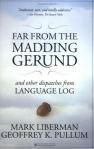
Far from the madding gerund …

This gallery contains 1 photo.

… is the title of a book by Mark Liberman and Geoffrey K. Pullum, published in 2006.  Based on their blog Language Log, it contains items on English usage but also topics that “might provoke a good laugh or draw … Continue reading

More Galleries | Tagged , , | Leave a comment

Likely, adverb or adjective?

This gallery contains 3 photos.

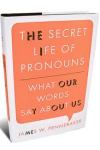
I’m currently reading James Pennebaker’s book The Secret Life of Pronouns (Bloomsbury Press, 2011): fascinating and intriguing, and I find myself nervously watching my own pronoun use as I write (too many first person pronouns already in this first sentence to … Continue reading

More Galleries | Tagged , , , , | 15 Comments

Jane Austen trying and …

This gallery contains 1 photo.

One of our readers mentioned Jane Austen in relation to an earlier post on the recommendation to avoid try and in favour of try to. Searching the novels for “try and” I found one instance, in Emma: I shall try … Continue reading

More Galleries | Tagged , , | Leave a comment

Who was John Honey?

This gallery contains 2 photos.

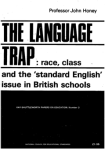
… one of our readers asked a few days ago.  “Where was he working when the National Council of Educational Standards asked him to write The Language Trap? Was he an academic?” she asked. What we know about John Honey … Continue reading

More Galleries | Tagged , , | 40 Comments

Starting a sentence with a conjunction?

One of my colleagues asked me the following question: Do you happen to know when the ‘rule’ of not beginning a sentence with a conjunction was formulated? This is just the sort of question that we would be able to answer … Continue reading

Posted in usage features | Tagged | 4 Comments

On the current status of try and

As a non-native learner of English I was taught in school that try and was a typical English idiom, and I’ve always happily used it. I was therefore surprised to learn that try and was reported as being one of … Continue reading

Posted in usage features | Tagged | 3 Comments

John Honey’s letters

This gallery contains 1 photo.

During the past few days we have acquired two sets of autograph letters by John Honey. One set, as the image below illustrates, contains a large number of letters connected with the reception of his controversial pamphlet The Language Trap … Continue reading

More Galleries | Tagged , , | Leave a comment