Linguistic Landscaping in Bookshops (4)

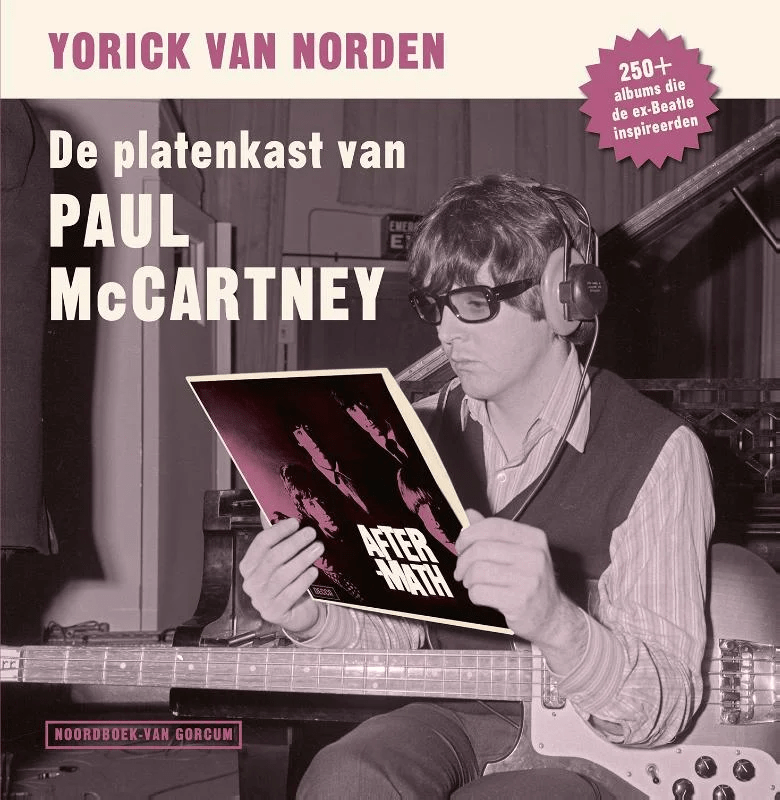
It occurred to me that what I’m doing with this project is similar to what Yorick van Norden did for his book The Platenkast van Paul McCartney (“Paul McCartney’s record collection”) which came out earlier this year. Except that my project is a linguistic one. But we both have in common that reading the spines of records (in his case) or books (in my case) is not always easy.

So here we go again. Yesterday I happened to be in Delft, which houses The Netherlands’ best-known technical university and of course the home of Vermeer.

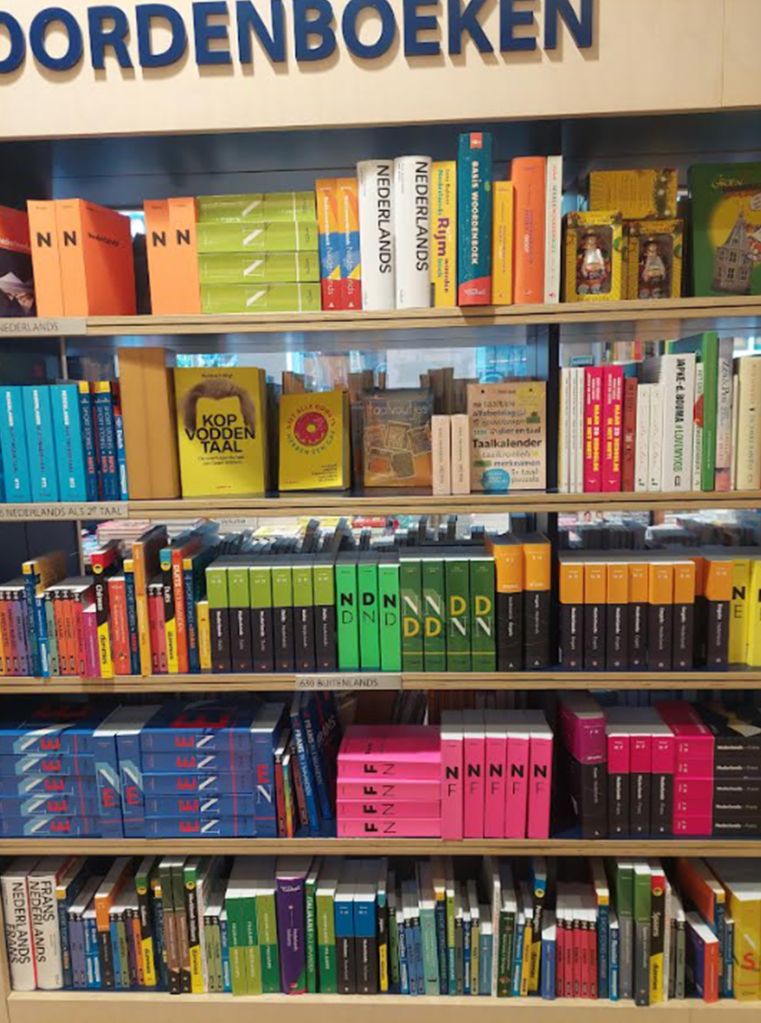
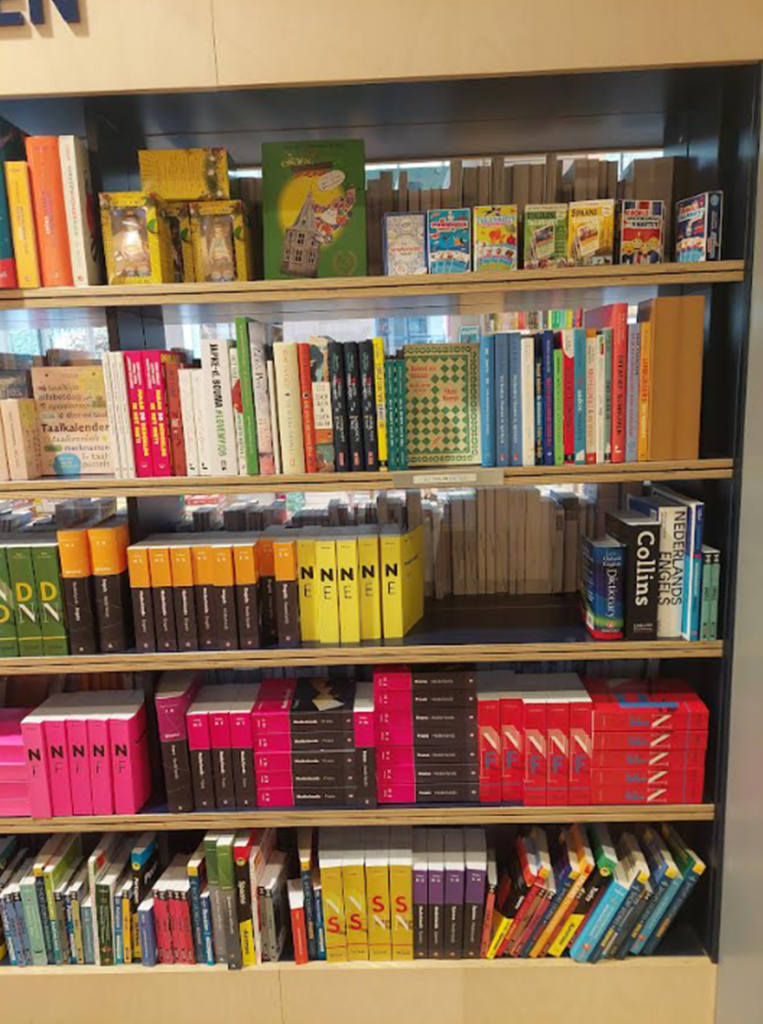
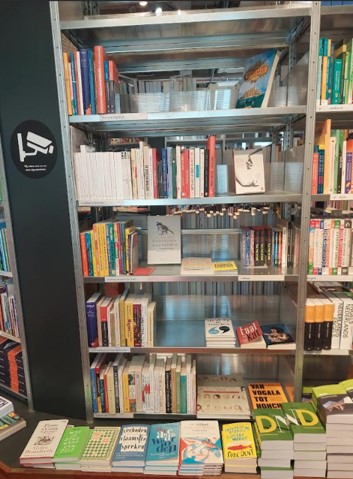
Very surprised at what I found in Paagman, situated near the Grote Kerk in the city centre, and a bookshop I was only familiar with in The Hague. A huge language section, which even included images of Haagse Harry (statuettes and Christmas decorations no less) that would be more suitably displayed in a bookshop in The Hague (and most likely are).

An impressive array of dictionaries in multiple languages, as well as a large selection of guides for learning foreign languages, including Greek (very hard to find when I embarked on the language two years ago) and Croatian (in Dutch as well as English).

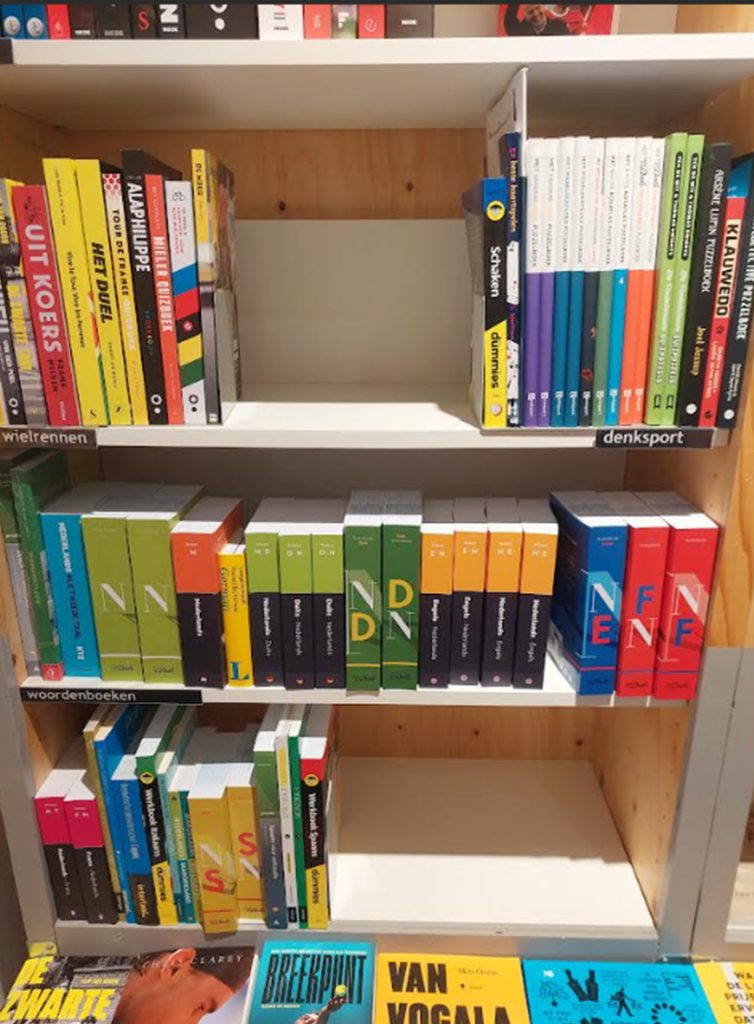
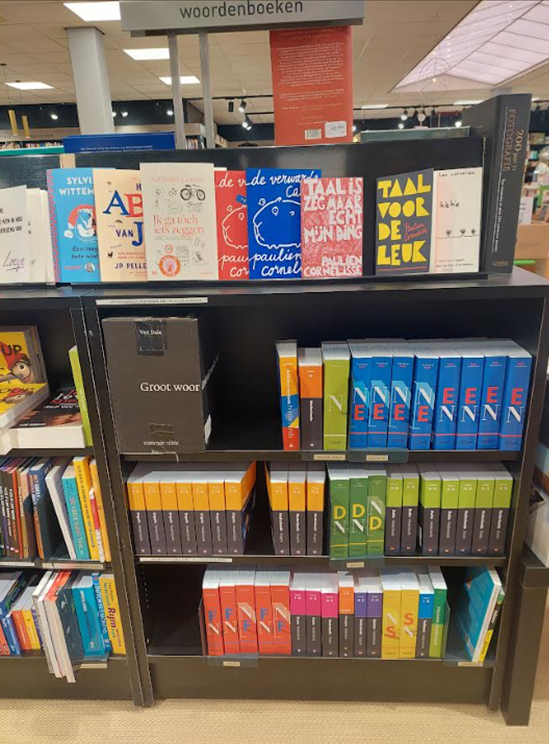
The second picture shows a whole shelve of – again – taalboekjes, on various topics, as well as writing guides. No usage guides here, unfortunately, neither for Dutch nor for English.

Posted in Bookshops, cross-cultural prescriptivism, Dutch prescriptivism, Linguistic Landscaping | Tagged , | Leave a comment

Linguistic Landscaping in Bookshops (3)

I had to be in Leiden for a social event this week, so decided to go a little earlier and visit as many of the bookshops in the city centre as I could manage. Three of them this time, all on the city’s High Street (Breestraat). The first, Kooyker, used to be the academic bookshop to go to for prescribed textbooks when I was an undergraduate, until another bookshop (now no longer there) took over this role. Disappointingly, their language section contained only dictionaries.

“We don’t have that kind of book anymore,” when the manager asked what I was looking for, and I told her: usage guides and manuals like that. “There is no demand for them any more.”

The next bookshop. Mayflower, just opposite, did have a language section. It contained a mixture of new and second-hand books, the manager there told me, more forthcoming than the one I consulted before.

Two copies of the Groene boekje at least, the official Dutch spelling guide (but not a usage guide as such, since by our definition such publications should not merely deal with spelling). And otherwise a kind of hotchpotch of books on language. Interesting and definitely appealing, but perhaps not the best place to lookg for usage guides.

Which I did find in the third bookshop I visited, De Slegte, a housefold name in this country for a good collection of second hand books as well as of new books remaindered at greatly reduced prices. It proved to have a great collection of books on language, including some usage guides!

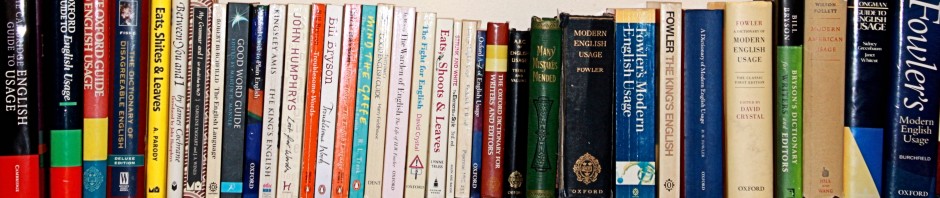
So yes, there is a Fowler! Any more usage guides you spotted? I used to find many titles there over the years when we were collecting books for the HUGE database we were compiling, and there seems to be no end of them entering the second-hand market. But … the second-hand market is not really what I’m interested in for my Linguistic Landscaping in Bookshops project. I’m interested in finding out what bookshops want to bring to the attention of potential buyers today, as indeed in Donner in Rotterdam or the ones I visited for my pilot search.

So gradually the focus of this new project becomes clearer! Do send me your findings! They will add to a wonderful (in my view) and promising new project for which crowd sourcing is indispensable. I can’t do this on my own.

Posted in Bookshops, cross-cultural prescriptivism, Dutch prescriptivism, Linguistic Landscaping, style guide, usage guide, writing guide | Tagged , , , , , , , , | Leave a comment

Linguistic Landscaping in Bookshops (2)

So far, I’ve got data from four bookshops, one in the UK (Foyles – London), two in The Netherlands (De Vries van Stockum – The Hague; Boekhandel Broekhuis – Almelo) and one in Germany (Dussmann – Berlin). On the start of this new project and the call for data from readers of this blog, see yesterday’s post. Contributions very welcome!

Since it is summer, we decided to cycle to Rotterdam yesterday (20 kms, lovely weather, little wind) to visit bookshop Donner there, our first visit, and what a surprise it was. It proved a veritable book buyer’s paradise! With a large linguistic section it even had a usage guide on display, Friederike de Raat’s Een Boek Vol Taalfouten – inexpensive, but already from 2019. Doesn’t Dutch have any more recent usage guides, I wonder? Interestingly, it was placed in the Cadeau section, meant to give away as a present.

I decided to buy it, so the only usage guides left are now Steven Pinker’s The Sense of Style and a Strunk and White (which clearly remains popular despite Geoff Pulum’s rightfully scathing criticism of it). So most amazing of all to me was actually their presence in this Dutch bookshop. English usage guides for Dutch readers, hmmm, and none for Dutch left after my visit. (And I’m not your average buyer of usage guides to begin with.) But in addition, the display showed many writing guides for Duthch as well. (Not the same as usage guides, though.)

Many interesting books on language though, like Khalid Mourigh’s Denkend aan Hollands, Gaston Dorren‘s Zeven Talen in Zeven Dagen and the Atlas van de Nederlandse Taal. As well as a selection of taalboekjes (see yesterday’s post for a definition) – placed under Cadeau. My husband suggested that I would have Een Boek Vol Taalfouten gift-wrapped, but no, I’m planning to read it myself.

Looking forward to more of this!

Posted in Bookshops, Dutch prescriptivism, Linguistic Landscaping, usage guide | Tagged , , , | Leave a comment

Linguistic Landscaping in Bookshops

Time for a new project! But this is one I can’t do on my own, so here comes a crowd sourcing request!

Do we find usage guides on display in bookshops? Or other types of books that deal with language and that are directed at a general audience? The Dutch term for such publications is taalboekjes, inexpensive books for the popular market that are written for (linguistic) entertainment rather than education.

In a pilot search, I found different practices between bookshops in different countries (the UK, The Netherlands, Germany). Here are two examples. The first is a picture I took in Foyles (London, city centre) in the summer of 2022, where I was surprised to find an old hand like Partridge side by side with a new usage guide I hadn’t heard about, Writing Wrongs by Robert Martin (2017).

The second one I took last Saturday in a fairly large bookshop in a small town called Almelo (75,000 people) in the east of The Netherlands (my home country), which I happened to be visiting during my summer holidays this year. It showed only taalboekjes and dictionaries. (Taalboekjes were present in Foyles, too, like Have You Eaten Grandma? in the above picture.)

So … if you happen to step into a bookshop wherever you are – and most of us can’t resist the temptation, I know from experience – please look for the language section (as in the above pictures), take a snapshot with your phone and mail me the picture! This will help me create a database which I will be able to use for proper research on the topic. Your help will of course be acknowledged!

Email: i.m.tieken@hum.leidenuniv.nl

Posted in cross-cultural prescriptivism, news, usage guide | Tagged , , , | Leave a comment

New feature by Matjaž Zgonc

Occasisonally, we publish contributions on topics of general prescriptive interest. I’m happy to announce our latest item, called “Legal Prescriptivism in Slovenia: a case of ipse dixit quantifier scope narrowing which helped sex offenders avoid prison time” which has been posted today. Have a good read!

Posted in news | Tagged , , , | Leave a comment

Just out: this semester’s last Language Law and Order podcast

Great news: one more of our podcasts in the Language Law and Order series is out, as the last one before the summer. This time, we’re interviewing Hielke Vriesendorp on his research in Inclusive Dutch: Between Norm and Variation. Have a listen and let us know what you think. Enjoy!

Posted in Dutch prescriptivism, news, Podcast on prescriptivism, podcasts | Tagged , | Leave a comment

Latest podcast: Prescriptivism in Schools

Just this weekend, the fourth podcast in our series Language Law & Order was made available for all those (and others) interested in the subject of prescriptivism and how it pervades our daily lives. This time, we interviewed Ian Cushing from Manchester Metropolitan University whose expertise is in the field of Critical Applied Linguistics. Definitely worth a listen!

I’ve you’ve missed the earlier episodes, or want to listen to them again, you’ll find them all here.

Posted in Language Law & Order, news, Podcast on prescriptivism, podcasts | Tagged , | Leave a comment

Your wrong!

We occasionally publish so-called features on this blog, and today, we’re happy to announce Emma Humphries’ call for “examples of prescriptivism in any form of popular culture and in any language”. Read more about her exciting project here, and don’t hesitate to send her examples that you come across (and that either bother you or not at all) in your day-to-day linguistic experiences, be it in social-media communications or while doing a yoga class.

Posted in Uncategorized | Leave a comment

Subscribe to Language Law and Order!

Yesterday, we recorded the second session of our new podcast Language Law and Order. It will be published within the next few days. But if you wish to be informed of any new episodes. you may subscribe to the podcast, and we will let you know. So send us you email address, and we’ll put you on the list!

Posted in news | Tagged , | Leave a comment

New podcast: Language Law and Order

Launched today, a new podcast by Linda Pillière, Morana Lukač and Ingrid Tieken-Boon van Ostade. Interested in prescriptivism and all it entails? Have a listen, and let us know what you think! There’ll be much more to come.

Posted in announcement, news | Tagged , | Leave a comment