Far from the madding gerund …

This gallery contains 1 photo.

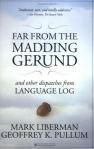
… is the title of a book by Mark Liberman and Geoffrey K. Pullum, published in 2006.  Based on their blog Language Log, it contains items on English usage but also topics that “might provoke a good laugh or draw … Continue reading

More Galleries | Tagged , , | Leave a comment

Real-time global English

This gallery contains 4 photos.

A little while ago we received an e-mail from the Collins Language Team with the request to review the beta version of their new free online dictionary. Although this is clearly part of a strategy of buzz marketing, I am … Continue reading

More Galleries | Tagged , , , , , , , , , | 2 Comments

Likely, adverb or adjective?

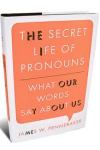
This gallery contains 3 photos.

I’m currently reading James Pennebaker’s book The Secret Life of Pronouns (Bloomsbury Press, 2011): fascinating and intriguing, and I find myself nervously watching my own pronoun use as I write (too many first person pronouns already in this first sentence to … Continue reading

More Galleries | Tagged , , , , | 15 Comments

Thusly is not a word?

Recently, one of my tutors pointed out my use of thusly in an essay. I used it thus: (except I would have added -ly there). Frankly, I was surprised to see it. Thusly was not a conscious choice during composition. … Continue reading

More Galleries | 19 Comments

Unlearning your mother tongue

This gallery contains 1 photo.

In a short story called “Mother Tongue” (2001), Ian McEwan writes about his efforts at acquiring standard English, a variety he had not learnt at home. As a result of his reading novels by Iris Murdoch and Graham Greene, [s]lowly, … Continue reading

More Galleries | Tagged , | Leave a comment

New Usage Poll: Poll number 5

A new usage poll is available: it is the fifth one, which we temporarily skipped. Please fill it in and let us know what you think about

  • older than me
  • evenings  as a plain adverb
  • different than
  • the placement of only
  • the use of literally.

You will find the poll under “Usage polls” (5th Usage Poll) in the header bar. We’re looking forward to the results!

Posted in usage features | Tagged , , | Leave a comment

Jane Austen trying and …

This gallery contains 1 photo.

One of our readers mentioned Jane Austen in relation to an earlier post on the recommendation to avoid try and in favour of try to. Searching the novels for “try and” I found one instance, in Emma: I shall try … Continue reading

More Galleries | Tagged , , | Leave a comment

Who was John Honey?

This gallery contains 2 photos.

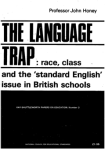
… one of our readers asked a few days ago.  “Where was he working when the National Council of Educational Standards asked him to write The Language Trap? Was he an academic?” she asked. What we know about John Honey … Continue reading

More Galleries | Tagged , , | 40 Comments

Starting a sentence with a conjunction?

One of my colleagues asked me the following question:

Do you happen to know when the ‘rule’ of not beginning a sentence with a conjunction was formulated?

This is just the sort of question that we would be able to answer once our database of usage guides and usage problems is up and running, but it isn’t as yet, so does anyone else know? Why was it formulated to begin with? And do you object to starting a sentence with and or but, or any other conjunctions? If so why?

Posted in usage features | Tagged | 4 Comments

March Forth on March Fourth!

Yesterday was National Grammar Day in the United States – a day to celebrate language and the neat things we do with it. National Grammar Day was established in 2008 by Martha Brockenbrough founder of SPOGG (Society for the Promotion of Good Grammar). This year’s sponsor is Mignon Fogarty, host of the handy site Grammar Girl which has been mentioned elsewhere on this blog.

Technically, the imperative to ‘march forth’ to promote good speaking and writing expired yesterday, but the celebration continues on the National Grammar Day website. The site features fun language-related items that can be enjoyed year-round. I recommend the dangerously catchy theme song, ‘March Forth: The Grammar Song‘.

Posted in events | Tagged | Leave a comment