Category Archives: usage features

More on Dutch “hun hebben”

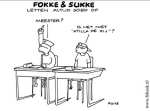
This gallery contains 1 photo.

Elsewhere in this blog we reported on the controversial use of hun hebben in Dutch today: it is widely used, possibly even spreading rapidly, but highly stigmatised at the same time. The pronoun hun in standard Dutch is an oblique form (“them”) or … Continue reading

More Galleries | Tagged , | Leave a comment

List of disputed usages

One of the readers of this blog drew our attention to the fact that there is a list of disputed usages in Wikipedia. The list includes ain’t, less for fewer, like for as, which were all dealt with elsewhere in this … Continue reading

Posted in usage features | Tagged , , , | Leave a comment

John Honey’s letters

This gallery contains 1 photo.

During the past few days we have acquired two sets of autograph letters by John Honey. One set, as the image below illustrates, contains a large number of letters connected with the reception of his controversial pamphlet The Language Trap … Continue reading

More Galleries | Tagged , , | Leave a comment

The “split infinitive syndrome”

This gallery contains 1 photo.

The quotation in this title is from an article by David Crystal on the split infinitive which appeared in English Today in 1985. It was taken from a book by Robert Burchfield, The English Language, which had come out that … Continue reading

More Galleries | Tagged , , | Leave a comment

You was in the history of English

One of the corrections in the second edition of Jane Austen’s Mansfield Park, originally published in 1814 but reissued in 1816, includes you was. This change was recorded by Kathryn Sutherland in her comparison of the two editions of the novel (Penguin … Continue reading

More Galleries | Tagged , , | 1 Comment

Does incorrect spelling matter?

This gallery contains 1 photo.

“… who moved differently then I knew”: this is a quotation from the website announcing the film Pina by Wim Wenders (UK release 22 April 2011). The error, then for than, is a typical Dutch mistake, according to Joy Burrough-Boenisch in her … Continue reading

More Galleries | Tagged , , , , | Leave a comment

Waterstone’s and their apostrophe

A few days ago, Marilyn Hedges, one of our contributors, left a comment to tell us that she had heard on the BBC Radio 4 Today programme that Waterstone’s has decided to drop its apostrophe. As Marilyn summarised: The reason given … Continue reading

Posted in news, usage features | Tagged , | Leave a comment

Dunglish: How English should a text be?

This gallery contains 1 photo.

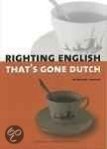
This will be one of the topics discussed at the SENSE panel discussion ‘Varieties of English: How prescriptive should we be?’ on 27 January (see under News for more information). One of the panel members will be Joy Burrough-Boenisch, the author of the … Continue reading

More Galleries | Tagged , , | Leave a comment

Something for the Christmas break

We have just published the sixth usage poll, which we hope you will have time to complete during the upcoming Christmas break. You will find it under the tab Usage polls just under the banner of this blog. We’re temporarily … Continue reading

Posted in usage features | Tagged , | Leave a comment

Usage problems in (Dutch) students’ essays

I’m currently reading a pile of students’ essays on the use of WordSmith Tools in the analysis of two eighteenth-century English novels. They make very interesting reading, and no two are alike. This time, though, in view of the discussions … Continue reading

Posted in usage features | 4 Comments