
Christmas is getting closer and the preparations for the festive season are well under way. If you think that pedants and sticklers will grant you some sort of Christmas amnesty, you are most probably wrong. For them the Christmas season is yet another occasion to spot their fellow citizens’ alleged abuses of the English language. In order to avoid any confrontation at the dinner table, here is some advice on how to write “pedantproof” Christmas cards.

Seasons Greetings?
The most common mistake on Christmas cards is the misplaced or, God forbid, forgotten apostrophe. In this article on SLATE, Kate Brannen provides a hilarious and personal insight into how Christmas cards can affect the Christmas cheer. Brannen illustrates the struggle and confusion caused by the pluralisation of the family name when writing Christmas cards. Is it the Johnsons? Or the Johnson’s? Zimmermans? Or Zimmermen? If you are not sure how to make your family name plural, go and check the table Brannen provides. Adding a apostrophe to the family name does not necessarily have to be wrong. If you do add one, it does not make your family name a plural but a possessive. So in case you would like to say that the annual Christmas party is taking place at your place, you could say: The Christmas party will take place at the Johnson’s.
The apostrophe also needs special attention when sending your Christmas wishes. The well-known and cherished Season’s Greetings are often confused with the apostropheless Seasons Greetings. Similar pitfalls constitute the capitalisation of merry Christmas and happy holidays. As merry, happy and holidays are not proper names, there is no need to capitalise these words, except of course they start a sentence. Well, at least technically. Capitalising holidays as in ‘Happy Holidays to you and your family’ seems to be a common variant.
What would you use? Do let us know and fill in the poll below!


 The same phenomenon seems to be now reflected in British English. In the British National Corpus, covering the period between 1980s and 1993, “train station” is used mostly in spoken language, which is the door through which change usually enters language. According to the Google Ngram Viewer, the situation has dramatically changed since then. Those who are opposing the American invasion will be glad to see that “railway station” is still in the lead, however, only by very few instances.
  One complaint from The Times about the usage of the phrase says:


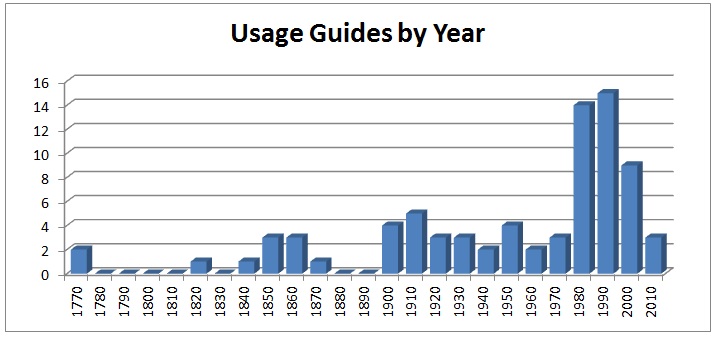
 The usage problems in the database are tagged with various linguistic levels: syntax, morphology, etymology, spelling, lexis, semantics and punctuation. The complete usage problem list can be found in the


