Even John le Carré has them

Source: Wikipedia

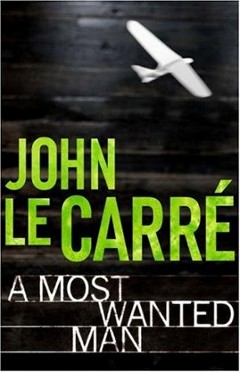
Metalinguistic comments that is, as in the novels of Kingsley Amis, Len Deighton and Ian McEwan. Reading A Most Wanted Man (2008), I came across several references to accent but also one to who/whom:

But for how long? And from who? Whom? (p. 275)

The speaker is the elderly Scottish banker Tommy Brue, one of the main characters in this novel situated in Hamburg.

Read more about all this, though not about John Le Carré, in chapter 7 of my forthcoming book Describing Prescriptivism.

Posted in Uncategorized | Leave a comment

Describing Prescriptivism

Soon to appear (expected publication date: some time in September):

9780367207182


Posted in announcement, news, usage features, usage guide | Tagged | Leave a comment

More complete?

In 2007, The Dutch Taaladviesdienst (a language advice service run by Genootschap Onze Taal)  published Taal top 100, a collection of the 100 most popular usage problems in Dutch, in the fields of spelling, grammar, lexis , punctuation and style. The preface opens with an interesting sentence: “Taaladviesboeken zijn er genoeg – het ene nog completer dan het andere.” In English: “There are plenty [Dutch] usage guides – the one even more complete than the other.”

In an English context, such a sentence would have provoked a lot of comment, the same kind of protest as that found for very unique. After all, words like complete and unique are so-called absolute adjectives, that cannot be modified by very or more, or so the argument goes. And indeed, one of the few Dutch letters to the editor I encountered was on “rather unique”, tamelijk uniek. So I was surprised to find this particular form in a language advice manual from what is arguably the most authoritative language advice body in The Netherlands.

So here is a question specifically directed at our Dutch readers: what about more complete? Do you find it acceptable or not? Please fill in the poll below and let us know.

Posted in usage features | Leave a comment

These ones, those ones

Just finished my article “Of greengrocers, sports commentators, estate agents and television presenters: Who’s in a usage guide and why” for a special issue with papers from Liv Walsh’s workshop In the Shadow of the Standard September last in Nottingham. It’s basically a critique of Caroline Taggart’Her Ladyship’s Guide to the Queen’s English (2010), one of the usage guides in our HUGE database. One of the groups criticised by Taggart are television presenters, for saying these ones and those ones. And look at what I ran into during my little walk to the city centre of The Hague during lunch time:

these ones

So what’s wrong with this, I wonder, Caroline: it looks just like the plural of this one, as the picture suggests. 


Posted in news, usage features | Tagged | 1 Comment

English Grammar Day 2019

Every year, some time during the summer, UCL organises an English Grammar Day. This time I have been invited to speak, and I decided to do so on the following topic (not yet announced online):

No complaint tradition in The Netherlands?

English, according to Milroy and Milroy in Authority in Language (2012), has a complaint tradition, which makes people write letters-to-the editor or, these days, post “below-the-line” comments to online newspaper articles about linguistic and other issues. The Milroys, moreover, claim that such a tradition is common in “technologically advanced societies [with] heavily codified standard language[s]” (2012:77). Not so, however, in The Netherlands. Unlike in the UK (or the US), usage guides, or language advice manuals, are barely a popular text type in my country, and unlike in the UK (or the US), people rarely write letters-to-the editor about language. And if they do, they write not about usage problems like the dangling adjunct or multiple negation, but – recently in particular – about the status of Dutch in the light of the increasing influence of English.

In this paper, I will contrast the attitudes to linguistic correctness as expressed by the British and the Dutch by discussing how they find an outlet for complaints about language, and how and where they seek usage advice. In doing so I will argue that major differences in this can be explained by the very different ways in which both societies are traditionally organised.

English Grammar Day will be held on 8 July in the British Library. I expect that practical details will be announced soon.

With thanks to Marten van der Meulen for sending me a copy of his paper (in English) on groter als/dan as an iconic Dutch usage problem.
Posted in events, news | 3 Comments

German academics and authors call for end to ‘gender nonsense’

From Sunday’s Guardian website … Oh for a German Academy!

On a separate note, the spell-checker here wanted me to change Guardian to Gardina! For those not familiar with the Guardian, it has for many years been known for its typographical errors; Private Eye still refers to it as the Grauniad.

Posted in Uncategorized | Leave a comment

Lest best: Viktorija Kostadinova’s thesis

Lying on my desk today is Viktorija Kostadinova’s PhD thesis, the third of the PhD students from the Bridging the Unbridgeable project. My warmest congratulations to her as her supervisor. She will be defending her thesis on 18 December: wish her luck!

Posted in news | Leave a comment

NYT does grammar survey

The New York Times has asked students to respond to a short piece on “Does grammar still matter in the age of Twitter?”, and received 172 responses! The piece can be found here.

Posted in Uncategorized | Leave a comment

Grassroots Prescriptivism

Yesterday, Morana Lukač defended her PhD thesis called Grassroots Prescriptivism at the University of Leiden. This was the second of the PhD defences from the Bridging the Unbridgeable project. Morana did extremely well, and the committee was most pleased about her performance. So on behalf of the entire project, congratulations, Dr Lukač!

We wish you the best of luck with your future career.

Posted in news | 1 Comment

Special issue of English Today (34/4)

Just out: our special issue of English Today,  with papers from Carmen Ebner, Lyda Fens-de Zeeuw, Viktorija Kostadinova, Morana Lukač, Robin Straaijer, myself and, as our very special guest, Rebecca Gowers. The issue (34/4) presents the papers we gave at the Life without HUGE? conference at Leiden, on 9 December 2016, which formally closed the Bridging the Unbridgeable project. Top articles cited (or tweeted about) at the moment are those by Carmen (8) and Morana (4). Keep following us: the project may be officially finished, but our work hasn’t.

Posted in news | Leave a comment