Please remember to check out with your public transport chip card

Dutch ov chip cardTwice a week, on my way to and from university, I hear the advice stated above: “Please remember to check out with your public transport chip card”. (The British equivalent of such a card would be the London Oyster card.) And each time I think: “remembering is of no use, one shouldn’t forget.” The Dutch counterpart of this sentence is: “Vergeet niet uit te checken met uw OV chip kaart”. Literally translated this would indeed be: “Don’t forget to check out with your public transport chip card”. Could one indeed use “Remember to check out with your ov chip card” and “Don’t forget to check out with your ov chip card” and not change the meaning? In other words, are remember and forget interchangeable?

From Google Books

Surprisingly, the Dutch public transport organisation chose the first option: “Remember to check out with your OV chip card”. Little was there to be found on the difference in usage between these different words. Otto-wolf (2005) provided me with a possible explanation. Remember is the positive way of referring to not forgetting something and this positive approach seems to work, according to her. The word remember stresses WHAT you want done. On the other hand, don’t forget clearly involves action. So why could it be the case that the transport chose remember? What we have seen so far is that Dutch public transport wants to approach English people with positive terms since we are sensitive creatures, whereas the Dutch are generally known to be direct. It may sound better to ask customers to remember something instead of to not forget it and the Dutch public transport people don’t want to give the impression that they are ordering persons around. This idea is strengthened by the use of please. But in terms of clarity: is this truly the message they want to convey? Until I have a clear answer besides these speculations, I will be forced to keep on thinking: “Why remember…?”

Or am I one of the few that consider this to be a problematic usage item?

References:

Otto-wolf, A. 2005. How Many Patches Has Your Tolerance Quilt? : Living with Tolerance for one Another”. Victoria: Traffic Publishing.

Posted in usage features | Tagged , | Leave a comment

It is not you, it is your grammar.

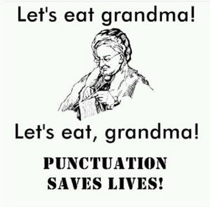
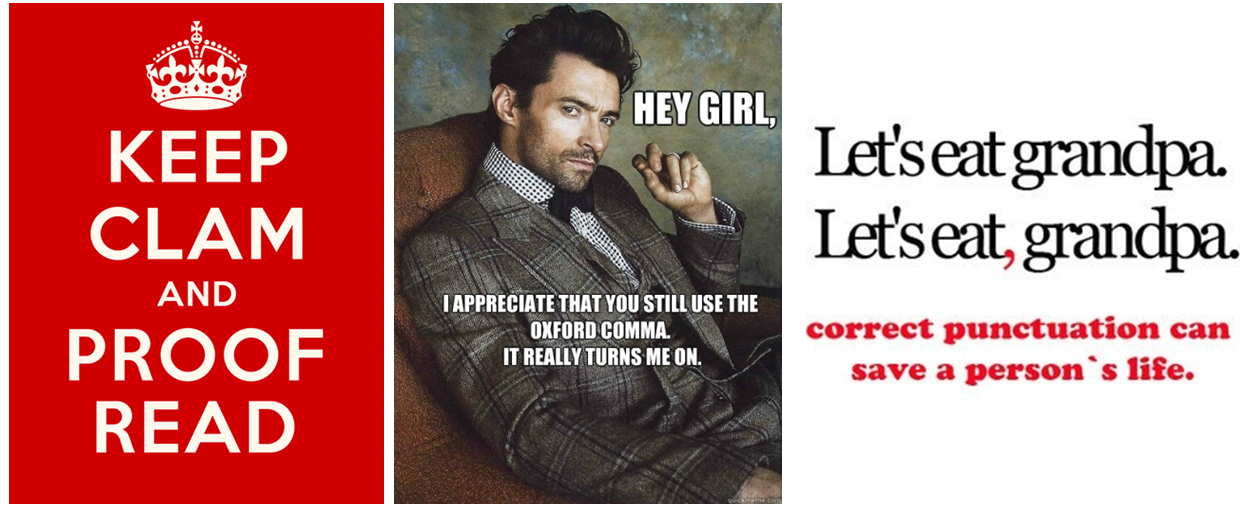
This is crucial information which can save and change your life and the lives of others. You may be not aware of the impact your use of grammar, spelling and punctuation can have on your future. Texting ur beautiful to your crush can kill butterflies and put feet back on the ground. Misplacing a comma can save lives, especially the ones of your beloved grandparents. And do you never dare splitting infinitives, because they can mean life or death.

Okay, this is maybe slightly exaggerated. But the truth is that there are many who care about flawless grammar, correct spelling and impeccable punctuation. If you do not want to miss out on finding your soul mate; if you want to save your grandparents’ lives and the entire universe, you should pay close attention to how you use your language.

This BBC article, a true gem, illustrates perfectly what we are dealing with in this project. Identifying the attitudes towards disputed usage and old chestnuts such as the split infinitive seems to be a topical issue. Nevertheless, it shows that language use is not merely an educational topic, but in fact rather personal. So what about you? Do you care about grammar, spelling and punctuation? Do you make judgements about people who use them differently? Pedant or not – show your true colours!

Grammar, spelling, punctuation

Posted in cartoons, usage features | Tagged , , , , , , | 2 Comments

Shampoos and Language Usage Reviews

This week, reading English Usage Book reviews, sociological issues to do with language communities, and a couple of blogs on Americanisms/Britishisms, I noticed two things: one is that, for the most part, commentators on the correct usage of English, despite (or perhaps as a result of) being necessarily finicky over small details, have in general a well-developed sense of humour (my patronizing tone denotes a ‘well done’ here). The second is that, when writing a usage guide for the enormous breadth of a language (and the equally broad potential for error), how does one decide which wrongs are the most worthy of comment? Here comes the shampoo cliche: it must be like standing in front of the shampoos in the personal hygiene aisle and debating the age-old question; which one is going to make the biggest difference? Although for language Usage Guide writers, the question is more likely to be along the lines of: which errors are the most intolerable?

fowler in his wimsuitIt turns out that this truly is the most complex of questions, and I (Alas!) am not the first to ask it. Deborah Cameron has dedicated an entire book to the question ‘How do we decide what makes language good, bad or indifferent?’; Milroy and Milroy warn of the dangers of over-prescriptivising –  at best leading to isolation and segregation within the education system, and at worst (heaven forbid!) making a fashion-feature out of a defective dialect; and even the famous Fowler admits the challenge to himself of limiting his scope in the preface of the first edition of his Modern English Usage in 1926. Given that the issue has never been out of print since, whatever choices he made then, he obviously chose wisely!

Stephen Fry online

The reason for the interest is that language, as it turns out, is something almost everyone has an opinion about. From academic (see Geoffrey K. Pullum’s  50 years of stupid grammar’); to the well-known (such as Stephen Fry’s trendy kinetic typography on ‘5 items or less’); and the just plain frustrated (Strunk and White; Lynne Truss; Ruffled in Tonbridge).  In fact, there are records of language-usage complaints going back as far as … (well, I don’t know, actually, do you?)

The problem is that we will keep changing what we do with it. Two recent examples of language usage which tickled me were the following:

1. The British obsession with the deplorable number of Americanisms in parlance – like – is matched only by the Americans’ equal disdain for Britishisms in their own speech – piffle and toff! (read about both here, and here).

2. The good old British Broadcasting Corporation, taking seriously their responsibility to uphold the British Language, has spent twenty-five years prescribing a course of action on the slippery collocation ‘to concede defeat NOT victory’. Even though, as Anya Luscombe tells us, this is not a standard replicated in other news bulletins, dictionaries or even the British National Corpus, and neither was it thirty years ago!

So who’s right and who’s wrong? And even if you might have been right once, at what point must you respectably hand over the gauntlet and say ‘We’re just going to have to concede defea-, no, admit victor-, no, wait hang on… give up, in over (?) … well, anyways, you get the point, don’t you?

Luscombe, A (2009) BBC Style. A look at the Style Guides and language of BBC Radio News bulletins.

Posted in MA Leiden, usage guide | Tagged , , , , | Leave a comment

Bertie vs. Mr Brown

source: wikipedia

The film Mrs Brown (1997), featuring Judi Dench and Billy Connolly, includes an interesting scene from the point of view of prescriptivism. At one point (ca. 50 minutes into the film), Bertie, the Prince of Wales, addresses the pertinent Mr Brown, saying:

Do you know who you address, Sir?

To which Brown replies:

Whom you address …

Exit Bertie.

Elswhere in this blog I gave some examples of prescriptivism in literary fiction, but it seems that prescriptivism is also exploited in films, to very good effect, as the correction effectively shuts Bertie up (as indeed such corrections do in real-life conversations). Any similar examples of this in films? But the really interesting point is the relationship of the above scene with the blogpost by Morana Lukač in which she shows that whom has been steadily on the way out since the 1930s. Was the above scene inspired by the awareness on the part of the script writer of this development in the 1990s?

Posted in usage features | Tagged , , , | Leave a comment

Poetry and Usage Advice

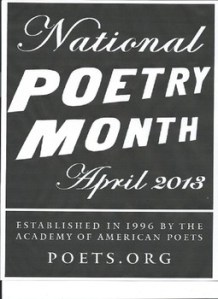
National Poetry MonthMore word-related news on April: it’s also National Poetry Month. Here’s a link to frequently asked questions about National Poetry Month. I’ll provide a quick summary as well. It was founded in 1996 by the Academy of American Poets, and the purpose is to take time to recognize, celebrate, and enjoy poetry in all sorts of ways. The site features lists of tips and lesson plans for teaching poetry this month. It’s also possible to celebrate with the Academy throughout the year via their free daily poetry emails.

I’m not going to lie. One of the main reasons I wanted to mention National Poetry Month was as an excuse to link to this soliloquy.

Questioning the meaning of life has never sounded so adorable.

Poetry mash upPoetic forms are also relevant in the context of this project as they may be employed in the dissemination of usage information. I think the Alphabet of Errors is a neat example of this: usage advice in rhyming couplets. I’m curious about the extent to which usage advice is conveyed – particularly to young people – using poetic forms. In some cases, perhaps it is merely the rhyme scheme, rather than the personal opinions of the author, which determines how usage information is presented.

Posted in events | Tagged , | Leave a comment

April is Bibliotastic

national library weekSpring and libraries: what do these things have in common? Besides being beautiful and making life more enjoyable, spring and libraries also share April. This month is National School Library Month in the U.S. Today also kicks off National Library Week there – which is officially bibliotastic.

Like many people, I love libraries and use pretty much any excuse to sing their praises. However, I think I’d be singing to the choir in the context of this blog. So instead, I’ll offer a few of my favorite library-related things – such as this video of librarians spoofing a Lady Gaga song. (Brace yourselves for greatness: it features Boolean references, a banjo, and modified Gaga-illuminati gestures.)

good trinitybaroque goodI also like this slideshow of beautiful libraries from around the world. I think Trinity College Library in Dublin wins the prize for elegance. But the slideshow also includes several impressive architectural designs and a breathtaking explosion of baroque.

At home, when I visit my mother in Lancaster, Wisconsin, the Schreiner Memorial Library is always on the agenda. It’s truly a gem. I mention this library specifically for three reasons. First, I want to give a shout out to the knowledgeable, patient, and compassionate staff members there. Second, I would like to express my appreciation to the library director, Alan, for his work in compiling, maintaining, and managing a high-quality collection of cultural for the community. Loving means giving – so I plan to donate to Schreiner Memorial Library this week, and I hope you will consider doing the same for a library which has been important in your life.

cropped-library-photos-0042The third and final reason that I mention Schreiner Memorial is because the U.S. public library system is an incredibly valuable resource for people seeking information on the topic of language (among many others) – especially for people with limited financial resources. One of the nicest things about Schreiner Memorial Library – and public libraries in general – is that they are places where different types of people with different interests and skill sets come together.

Thin bookPublic libraries such as Schreiner Memorial are ideal places to study attitudes to language usage in the U.S. The titles of reference works on language and information on the frequency with which these works are checked out would provide a clearer picture of the popularity of usage guides and of other reference material on language. Are these works consulted frequently? Are they read from cover to cover? And how has the frequency with which such works are checked out changed over time and with local technological trends?

I will leave one more thing for the commencement of this week’s bibliocelebration: this amazing book Library Jokes and Jottings: A Collection of Stories Partly Wise but Mostly Otherwise. Enjoy!

Posted in events | Tagged , , , , | Leave a comment

Out with whom, in with the split infinitive

One of our blog authors recently tackled the “whom issue”, and it made me wonder if this word is really dying out. Our readers will also remember several posts featuring the split infinitive, the pedants’ pet peeve.

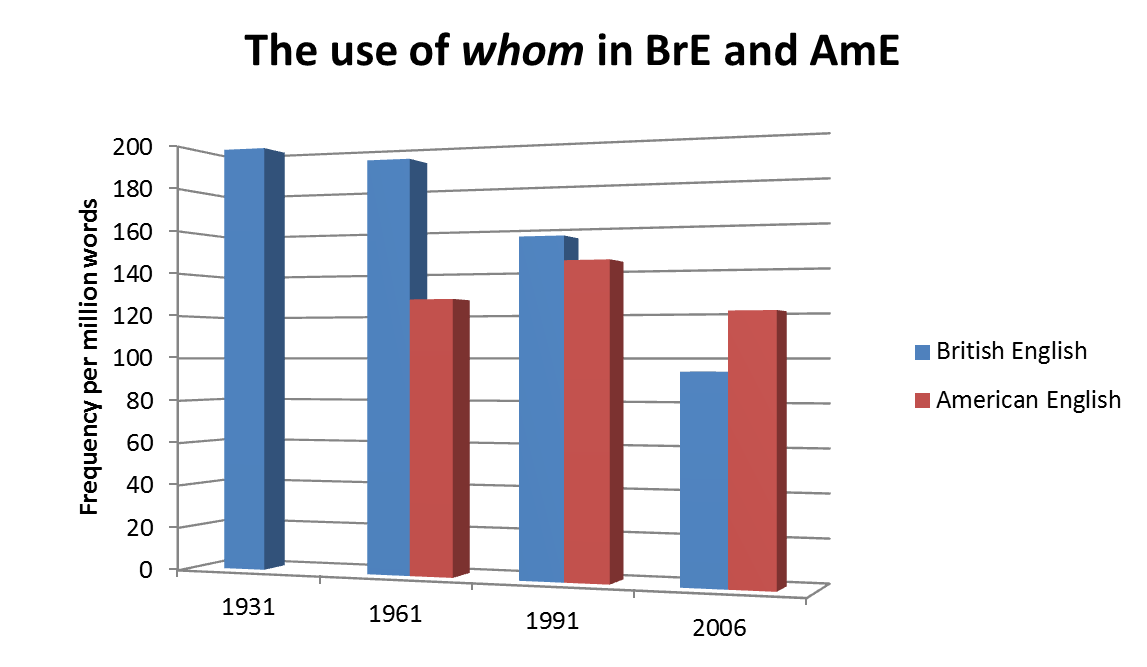
I have decided to explore the actual usage of whom and the split infinitive (separated by one adverb only) in British and American English from the first half of the twentieth century onwards. I investigated the changes in British English for the period 1931- 2006 (corpora used in the analysis: BLOB-1931, LOB, FLOB, BE06) and in American English for the period 1960s-2006 (corpora used in the analysis: Brown, Frown, AE06).

Here are the results (the data for American English in 1931 are not available):

whom1

SIF

Whom has indeed been losing popularity in British English since the 1930s, and the decrease in use is getting sharper. Things are not as straightforward in American English, where it seems that whom witnessed a revival in the beginning of the 1990s, which was again followed by a decrease in use.

Things are, on the other hand, rather unambiguous when it comes to the split infinitive. This grammatical construction is on the rise. The increase in  use was not as dramatic in British English in the period between the 1930s and the 1960s, but it has rocketed since then. A similar trend can be identified in American English: a high increase between the 1960s and the 1990s, with a continuing rising trend.

What do you think, which other constructions and/or words are on the rise, and which ones are on their way to extinction?

Posted in usage features | Tagged , , , , , , | 5 Comments

Which online sources on language use do you consult?

Capture

In 1995, Deborah Cameron made an observation which was years ahead of its time: “[The Internet] is an ideal arena for swapping linguistic trivia and debating matters of usage”.

By now it is more than obvious that Cameron was right; there is a multitude of blogs and fora for those seeking and giving linguistic advice. These online sources seem to be competing against and possibly winning  the battle against the good old paperbacks and hardcovers when it comes to usage tips on the go.

Within our project, we cannot have a full overview of usage advice and attitudes towards usage without consulting the online sources. We have some of our favourite sources included in our blogroll on the right, but we would rather hear about yours!

Which sources do you consult when you are in doubt about prepositions, agreement, lexical choice, split infinitives, or dangling participles.

Please, fill in our survey below! (We need answers in the Other box).

Posted in polls and surveys, usage features, usage guide | Tagged , , , | Leave a comment

The more merry the merrier?

Over coffee today a Dutch friend of mine told me how surprised she had been when listening to a radio station the other day and hearing the phrase ‘… meer prominente plekken’. The context was a radio broadcast on the increasing popularity of supermarket own-brand products in economic hard times and its result: shop managers were dedicating shelf space to own brand products in more prominent places.  The issue, my friend patiently explained for the benefit of my ignorant, Dutch-less self, is that a comparative structure such as this should (grammatically speaking) have contained the morpheme –re. In other words, the correct expression would have been prominentere plekken (without the meer).

We discussed several reasons for this (as you do when you’re drinking coffee), and came up with the following:

1) Misinterpretation: The broadcaster in question was actually referring to the increasing amount of prominent shelves in stores, rather than the way that the space was being used to display products – unlikely, since the context was economic hardship, not expansion.

2) A slip of the tongue: in full flow, it’s harder to monitor your own production than it would be in writing. Given that the report was a monologue for a large (unseen) audience, with a lack of any immediate feedback, the presenter may have moved on too far to self-correct by the time she noticed – if she did notice. Less forgivable though, if she’s merely reading from an autocue.

3) An English-ism: This is possible, since meer prominente is a direct translation of the English more prominent, and phonetically as well the phrase carries the same sound structure. It could be that she is merely an English enthusiast (which we shall not hold against her).

4) Evidence of language change in progress. This is also possible, though difficult to measure. A brief look at the Dutch National Corpus, however, will quickly tell you that meer goed for example, only appears in the context of meer goede doelen – so not as a comparative at all (and many a Dutch speaker may wonder why I even bothered to consult a corpus).

The mention of English gets me thinking about our own, slightly less straightforward, rules on comparative constructions. Like most things which have the capacity to be relatively clear in English, it is in fact confusingly muddy. Whereas the Dutch idea is simply to add –re to any adjective to make it comparative, the English system has a complex mix of more, less, –er and –ier– not to mention the occasional doubling of consonants. So which form do we use when?

For a pre-intermediate learner using Oxford’s ‘New English File’ series, comparatives are explained as follows:
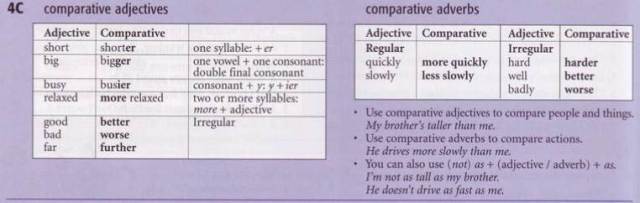
comparative

 C. Oxenden et al. (2005), New English File Pre-intermediate Student Book. Oxford University Press (p. 132).

An unsure linguist, however, might prefer A Glossary of English Grammar, where they would find the following:

Comparative: The form of a gradable word which ends (according to the regular rule) in –er, and which indicates a comparison of two things in terms of a higher or lower position on some scale of quality or quantity, for example wider, colder, happier. There are a few irregular comparative forms, for example: good-better; bad-worse; little-less; many/much-more; far-further. Regular one-syllable gradable adjectives and adverbs form their comparative by adding -(e)r, but for most adjectives  and adverbs of more than one syllable it is necessary to add the preceeding adverb more (or less for a comparison in the opposite direction), for example more careful, more slowly, less natural.

G. Leech (2006), A Glossary of English grammar. Edinburgh. Edinburgh University Press (p. 20).

So far so different. Perhaps Swann’s Practical English Usage will provide a more definitive answer?
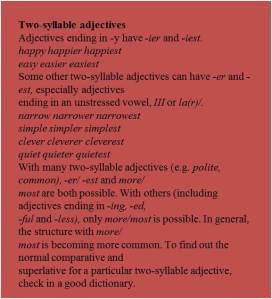
Swann 2005

M. Swan, (2005), Practical English Usage (3rd ed.) Oxford. Oxford University Press (p. 113).

Well, that certainly clears that up.  Back with the coffee and my friend is wondering aloud who we can trust to produce a standardized, grammatically correct example for the public if not media broadcasters and journalists, and I agree with her. But with such overwhelming potential for forming comparatives in English, I can’t help feeling that had the poor broadcaster been speaking English, she would have been more easily forgiven. Which only leaves one question:

How do you form yours?
Posted in MA Leiden, usage features | Tagged , , | 1 Comment

My (P)interests include grammar

ImageAlthough grammar is surely a serious matter, pedants have managed to find amusing ways of promoting correct language use online. Check out the collection of the fun and informative grammar pins on our new Pinterest board “Grammar Matters”. Pinterest is indeed not only used by the fashion, home décor, travel, or food buffs – this platform is a great source for finding out about grammar and language pet peeves.

Social media are among the spheres of interest within our project. These fun pins might give us a better insight into the successful ways of promoting language use awareness. Feel free to pin & repin!

Posted in technology | Tagged , , , , | Leave a comment