A Way with Words

I am one of many fans of the public radio program, A Way with Words. The show is broadcast from San Diego and presented by Martha Barnette and Grant Barrett. They discuss a variety of language-related topics in an accessible, upbeat, and informative manner. Part of what I find so entertaining about the program is how the hosts navigate the tricky territory between staying true to their descriptive approach and sating some listeners’ desire for unequivocal answers to usage questions. A great example of this can be found around minute 20 of the recent episode, Secret Gibberish. The caller voices her irritation with the descriptive approach and longs for an Academy of English.
Posted in Uncategorized | Tagged , , , | Leave a comment

On the current status of try and

As a non-native learner of English I was taught in school that try and was a typical English idiom, and I’ve always happily used it. I was therefore surprised to learn that try and was reported as being one of the pet linguistic hates with BBC news writers.

My awareness of this usage problem was recently heightened by the fact that a reader of a draft version of a book I’m writing commented on my regular use of try and which he or she said was “too informal for scholarly writing”. I’ll follow the reader’s suggestion, and change all my try ands to try tos (even though I don’t like “to try to …”: too many tos!).

Posted in usage features | Tagged | 3 Comments

More on Dutch “hun hebben”

This gallery contains 1 photo.

Elsewhere in this blog we reported on the controversial use of hun hebben in Dutch today: it is widely used, possibly even spreading rapidly, but highly stigmatised at the same time. The pronoun hun in standard Dutch is an oblique form (“them”) or … Continue reading

More Galleries | Tagged , | Leave a comment

List of disputed usages

One of the readers of this blog drew our attention to the fact that there is a list of disputed usages in Wikipedia. The list includes ain’t, less for fewer, like for as, which were all dealt with elsewhere in this blog. And some occur in the usage polls as well.

Would you ever consult a list like that, or recommend it to students or clients you work for as copy-editors perhaps? Or would you like to add any other features to it?

Posted in usage features | Tagged , , , | Leave a comment

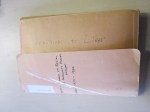
John Honey’s letters

This gallery contains 1 photo.

During the past few days we have acquired two sets of autograph letters by John Honey. One set, as the image below illustrates, contains a large number of letters connected with the reception of his controversial pamphlet The Language Trap … Continue reading

More Galleries | Tagged , , | Leave a comment

The “split infinitive syndrome”

This gallery contains 1 photo.

The quotation in this title is from an article by David Crystal on the split infinitive which appeared in English Today in 1985. It was taken from a book by Robert Burchfield, The English Language, which had come out that … Continue reading

More Galleries | Tagged , , | Leave a comment

You was in the history of English

One of the corrections in the second edition of Jane Austen’s Mansfield Park, originally published in 1814 but reissued in 1816, includes you was. This change was recorded by Kathryn Sutherland in her comparison of the two editions of the novel (Penguin … Continue reading

More Galleries | Tagged , , | 1 Comment

3 PhD positions for the project: we are reviewing the applications

The three PhD positions for the Bridging the Unbridgeable project that were announced earlier in this blog have now been advertised officially. You will find them on the Leiden University Centre for Linguistics website. For more information about the positions as well as for a description of the project details, please contact Ingrid Tieken, through the email address provided in the LUCL advertisement.

It might be relevant to know that we are looking for candidates with an MA in linguistics, preferably in English language and/or linguistics. Please note that the deadline for applications is 15 March 2012.

Posted in news | Tagged , | Leave a comment

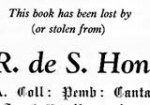
“Sweet Honey”

This gallery contains 1 photo.

This image comes from the website of Plurabelle Books, which is situated in Cambridge (UK). It is part of a bookplate indicating the ownership of the book in which it was found. The owner’s full name is John Raymond de Symons Honey, … Continue reading

More Galleries | Tagged | 1 Comment

Does incorrect spelling matter?

This gallery contains 1 photo.

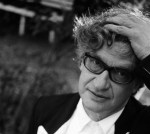
“… who moved differently then I knew”: this is a quotation from the website announcing the film Pina by Wim Wenders (UK release 22 April 2011). The error, then for than, is a typical Dutch mistake, according to Joy Burrough-Boenisch in her … Continue reading

More Galleries | Tagged , , , , | Leave a comment