
Image from wsj.com
There have been many interesting articles about language use related to the 2012 presidential election in the U.S. Some of my favorites include this recent one on the ‘mass-nounification of vote’ by Ben Zimmer and this one on the use of the phrase ‘razor tight’ by Arnold Zwicky – which has also been noted by Steven Colbert among others.
I’m not a superstitious person. However, for some reason, I wanted to wait until the election results were in before mentioning my favorite 2012 campaign language issue: the punctuation of President Obama’s campaign poster, ‘Forward.’
This potentially-momentum-undermining period/full stop has received quite a bit of media attention. In an article in the Wall Street Journal, linguist George Lakoff is quoted as supporting the conventional correctness (if not effectiveness) of the period in this context – as ‘forward’ is an imperative – while Grammar Girl, Mignon Fogarty, was more reserved in her assessment. In the same article, a Republican representative referred to the period as ‘sort of a buzz-kill’. Meanwhile, perhaps the most salient and humorous quote related to the offending punctuation mark came from Obama-advisor Austan Goolsbee: ‘[i]t’s like “forward, now stop”’. (One might also note his use of like.) And David Axelrod had this tip for the president’s campaign: ‘[t]ell them just to put two more dots on it, and it’ll seem like it keeps going.’

Image from Politico.com
There have been plenty of note-worthy instances of English usage in the 2012 election cycle in the U.S. – as this N.Y. Times article, which was mentioned on the blog yesterday, demonstrates. However, for me, the use of the period featured in ‘Forward.’ is special. In the past few years, I’ve noticed what seems to be an increasing proliferation of periods and pauses in informal English.
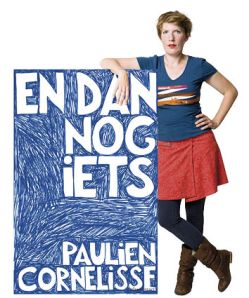
Image from bureauvandam.nl
I was pleased to find some cross-linguistic support for my feeling in a Dutch book by the wonderful cabaret performer and writer Paulien Cornelisse. Her recent book, En Dan Nog Iets, is filled with funny insights into different aspects of everyday language use – some of which were compiled from her columns in the NRC.next, Klare Taal, and the NRC Handelsblad. Cornelisse writes at one point (pp. 44-45) about the trend she has noticed in the speech of 16-year old young women: To scatter. Pauses. Incessantly. Throughout. Their informal speech.
It would be interesting to hear whether readers of this blog have also noticed this possible period/pause trend in writing or speech in English or other languages. I’d also be very pleased to receive information on language use in political campaigns outside the U.S. Specifically, I’m curious about whether the punctuation of political posters attract this degree of attention in other countries as well.
The 2012 election cycle in the U.S. has been rather exhausting for many who have followed it. But, as far as I’m concerned, quotes like this one from campaign spokesman Ben LaBolt (found in the WSJ article mentioned above) make it all worthwhile: ‘Stay on your toes—anything could happen, […] Do not be surprised if we introduce a semicolon.’ A good semicolon joke can compensate for a lot.


 … he [son-in-law] thinks you must be silently criticising his English all the time because you’re a Professor of Linguistics.” I laughed at that, because modern linguistics is almost excessively non-prescriptive, but I suppose there might be some truth in it. Peter is from a working-class background, speaks with a perceptible local accent and uses the occasional dialect word … I tried to put him at ease next time I saw him by attacking Lynne Truss’s bestselling book on the apostrophe, but only succeeded in upsetting him – it turned out he is a devout believer in Truss and uses her book as a kind of bible (p. 82).
 Usage guides seem to be a typical English language product. As for Dutch, I was only aware of the existence of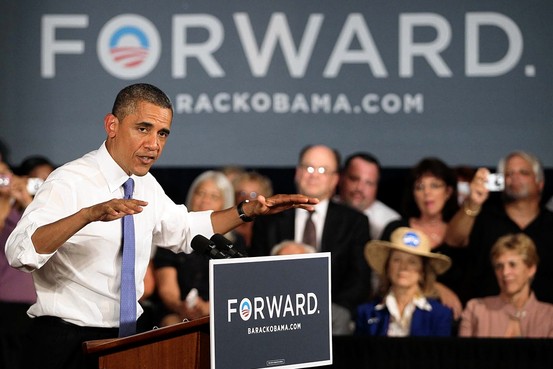


 Bridging the Unbridgeable