A Database of English Usage Guides & Usage Problems

This gallery contains 1 photo.

The project Bridging the Unbridgeable’s Monthly Lunch Lecture is very proud to present: A Database of English Usage Guides & Usage Problems Since historical (socio-) linguists of the English language have begun to study the topic of usage, there has been … Continue reading

More Galleries | Tagged , , , , | Leave a comment

Snuck in Canadian English?

If snuck is very common in British and American English (see elsewhere on this blog), how about Canadian or other Englishes? I found the following example in Margaret Atwood‘s The Blind Assassin (2000):

People snuck off to Stratford or London or Toronto even, obtained their copies on the sly, as was the custom then woth condoms (p. 41).

Is it the context – on the sly, condoms bought under the counter – that calls for snuck rather than sneaked here, or is sneaked simply no longer very common full stop? Are there any corpora of Canadian English where we can verify this?

Posted in usage features | Tagged , | 2 Comments

The Art of Usage Guides

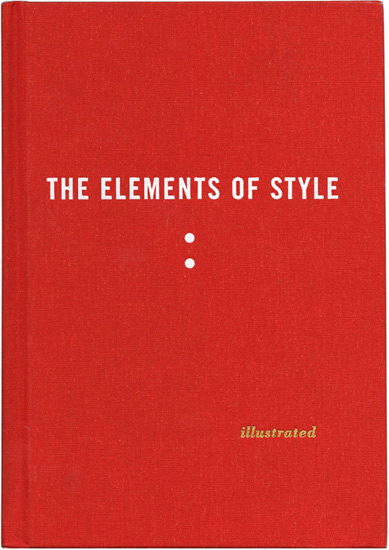
‘The Elements of Style Illustrated’ 2005, Viking

This morning, while I was browsing around one of my favorite websites brainpickings.org, I came across an article which mentions the 2005 edition of William Strunk Jr. and E.B. White’s classic The Elements of Style. This edition is illustrated by the American artist, author, and visual blogger for The New York Times, Maira Kalman. Her illustrations are whimsical and lovely. A few images from The Elements of Style Illustrated can be viewed here.

This beautiful edition led me to wonder whether there are other illustrated style or usage guides available. The results of a quick google search suggest that the answer to this question is ‘no.’ However, if any readers of this blog can recommend other illustrated style or usage guides, please let us know. Or, better yet, send us your own illustrations representing specific usage guides or usage problems so we can compile a collection to share.

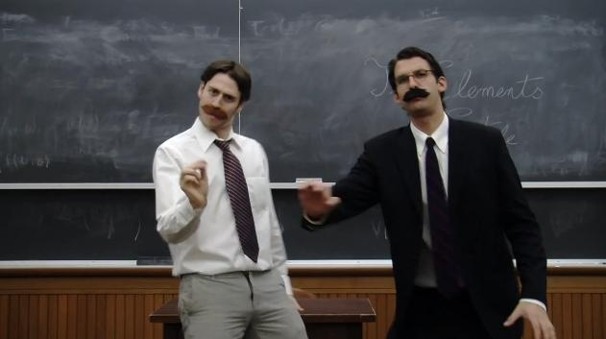
On a different note, I can’t resist mentioning one of the greatest videos I’ve seen in a while. This video was also featured on brainpickings.org: The Elements of Style Rap, by Jake Heller (‘Strunk’) and Ben Teitelbaum (‘White’). Get ready to giggle.

Screenshot, Vimeo from The Style Blog of The Washington Post.

Posted in Uncategorized | Tagged , , | 1 Comment

Prescription conference proceedings

Three conferences have preceded the Leiden 2013 one, and their proceedings have all been published. In case you want to whet your appetites, have a go at them, and come to Leiden next year for more.

Posted in news | Leave a comment

On snuck and sneaked

Mesthrie et al. write on p. 23 of their book Introducing Sociolinguistics (2nd ed., 2009, Edinburgh University Press, that different verb forms are regarded as standard in the UK than in the US. One example they is give is snuck/sneaked, on which they remark that as a participle snuck is common “in parts of the USA against sneaked in Britain”.
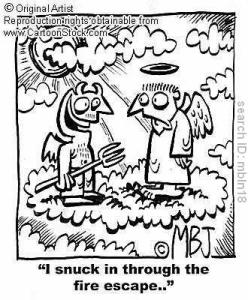
Checking this against the data found in the 100 million-word British National Corpus would seem to confirm this for British English at least: there are only 11 instances of snuck as against 132 for sneaked (though I didn’t separate the data for past tense or past participle).

Sneak is a usage item in British usage guides. At least, I found an entry for it in the Longman Guide to English Usage (Greenbaum and Whitcut, 1988), which states quite categorically:

The past tense and participle are sneaked. The past tense is snuck in American English only, and is nonstandard or jocular (p. 659).

Do you agree with this? Has usage changed, perhaps, since the late 1980s? And what about American usage guides?

One immediate comment that came in just now deserves to be quoted at length. The comment comes from Matthijs Smits, who recently completed his MA thesis at Leiden, called “’Garnering’ Respect? The Emergence of Authoritty in the American Grammatical Tradition”:

Using information from the online 450 million Corpus of Contemporary American English (COCA), I found that snuck has actually become increasingly popular over the last 20 years (1990-2012). A well-established usage guide, Garner’s Modern American Usage (3rd ed., 2009), states that “snuck” is nonstandard and occurs “half as often” as “sneaked” in writing. The COCA results show that “snuck” is far more common in speech than “sneaked”. In writing, COCA shows that the NEWSPAPERS category contains more entries for “sneaked”, although the FICTION and ACADEMIC categories are very close. Thus, I think usage has certainly changed regarding sneak and snuck (with snuck becoming more acceptable over time).

Also, the issue was once debated during Conan O’Brien’s talkshow, when actress Jennifer Garner (unrelated to Bryan Garner) chastised O’Brien, stating that “snuck isn’t even a word”.

Many thanks for this, Matthijs!
Posted in usage features | Tagged , , , | 3 Comments

Worried about Americanisms? Apparently so!

One of our readers sent us a link to an item from the BBC News Magazine, from 20 July last year, on Americanisms. It is well worth looking at. Thanks, Katherine!

The article reads that thousands responded: any additions from our readers?

Posted in news, usage features | Leave a comment

Prescription and Tradition in Language: call for papers

Fourth Conference on Prescriptivism: for the call for papers, click on the link above.

Posted in events, news | Tagged , , , | Leave a comment

English Historical Linguistics in Zürich

This gallery contains 3 photos.

Last week, the 17th International Conference on English Historical Linguistics was held at Zürich University in Switzerland. On Monday afternoon, the conference was opened with a word of welcome by the president of the university Andreas Fischer, who is also an English historical … Continue reading

More Galleries | Tagged , , , , | Leave a comment

8th usage poll

In case you were worried that we were no longer interested in your views on usage, here, at last, is our 8th usage poll. It includes items 36-40 from the survey by Mittins et al. (1970). As before, we are interested in your opinions.

This time, we would also be interested in what terms you use to describe the features illustrated by the example sentences. Please enter this in the comment section below.


Posted in usage features | Tagged | Leave a comment

Prescriptivist joke

I heard this one last night from my (British) brother-in-law:

There used to be only three vowels before You and I.

Any other such jokes? In English or any other language?

Posted in usage features | Tagged , | Leave a comment