For a paper I’m planning to write on the breaking of prescriptive rules by literary authors for characterisation purposes, I’m looking for specific examples of the breaking of the who/whom rule. I have several examples of them already, and have occasionally posted them on this blog. But more would be very welcome!
Also, I’d be interested in your thoughts about why Martin Amis, in his recent book Inside Story (2020) bothers to explain the rule for the use of who and whom. In a novel, as well. Why would he have done so? Any suggestions from people who’ve read his book already?
My reading of the last book of John Le Carré’s Karla trilogy, featuring George Smiley, Smiley’s People (1979), produced two more prescriptive comments. (There may have been more, but these caught my attention, possibly because both are in the HUGE database.)
The first is about the usage problem -ic/-ical, a topic dealt with by Robin Straaijer in an article from 2018. There are different preferences for either form between British and American English, as indeed seems to be the issue that is at play in the book:
“Yes, sir, ‘an extinct case of purely historic concern’, sir,” Strickland went on, into the telephone. […] “And Oliver Lacon proposes to have it included word for word in the D-Notice. Am I on target there, Oliver?”
“Historical,” Lacon corrected him irritably. “Not historic concern. That’s the last thing we want! Historical.” (p. 44)
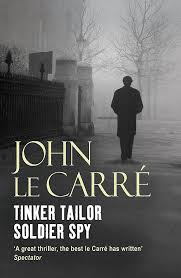
From the context it appears that Strickland is talking on the telephone to Saul Enderby, the Circus’s new head after the uncovery of Bill Haydon as a double agent in the previous book, Tinker Taylor Soldier Spy (1974). “Not your style, I grant you,” Lacon continues, talking to Smiley, “why should he be? He’s and Atlantic man.” An Atlantic man showing preference for American grammar, it appears, may not have been Smiley’s style either.
The other instance is an example of a flat adverb:
“… Down here, please, sir, that’s the way! Walking normal still, please note,” the Superintendent had added, making a rare slip of grammar in his distraction. (p. 82)
Since the Superintendent is here addressing Smiley, we seem to have some interior monologue here. Adding up to that instance in Tinker Taylor Soldier Spy it looks as if we can add a strict view on linguistic correctness to the way Smiley is depicted. I have two more Smiley novels to go, The Secret Pilgrim (1990) and A Legacy of Spies (2017).
Eighteen months or so ago I wrote a post about John le Carré, because I’d discovered that, like Kingsley Amis, Len Deighton and Ian McEwan, he too writes metalinguistic usage comments in his novels. My post then was about a comment on who/whom, this time the comment is about the use of got without have, which le Carré attributes to American usage. The quotation is from Tinker Taylor Soldier Spy (1974):
‘I won’t be quoted, George,’ the Minister warned in his lounging drawl. ‘No minutes, no packdrill. I got voters to deal with. You don’t. Nor does Oliver Lacon, do you, Oliver?’
He had also, thought Smiley, the American violence with auxiliary verbs: ‘Yes, I’m sorry about that,’ he said (p. 254).
Is Smiley presented here as a prescriptivist? Note the double entendre in the second part of the quotation. I’m reading all the Smiley novels in their proper order this year, so who knows what else I will find.
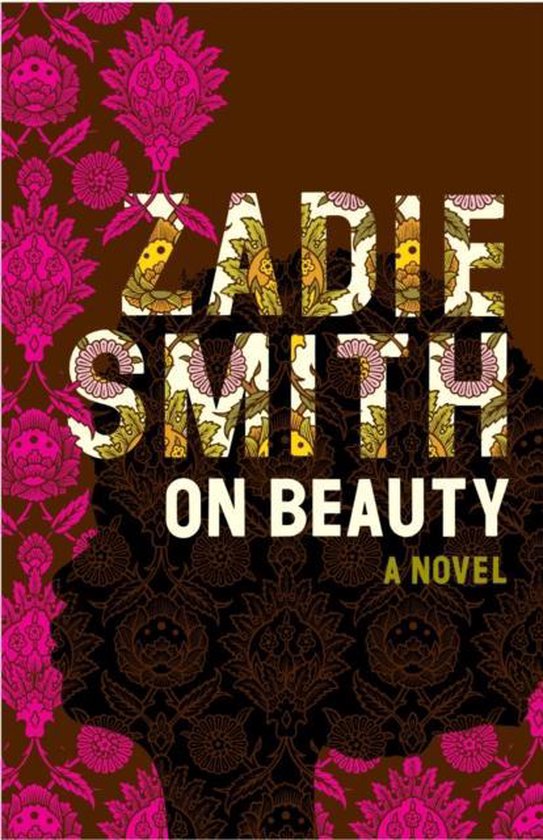
My book, Describing Prescriptivism, has been out for nearly a year now, but I still run into references to usage guides in the literary literature I read that are too good not to make a note of. Or reread, as in the case of Zadie Smith’s On Beauty (2006), which I first read well before the Bridging the Unbridegable project set off.
The reference is to Fowler’s Modern English Usage (p. 146), and the character discussed is said to have written “a colossal, almost painfully detailed biograpny”. The only biography of Fowler I’m familiar with is the one by Jenny Mc Morris, called The Warden of English (2001). It is neither colossal nor painfully detailed, just an excellent book and a really good read to boot. So why the negative qualification? Is it Fowler’s reputation as a stickler for correctness that Smith is – unduly, in my opinion – drawing on?
The Bridging the Unbridgeable project may be officially closed, publications by its members continue to appear. Just now, my copy of Language Prescription: Values, Ideologies and Identity landed on our doormat, edited by Don Chapman and Jacob Rawlins. It includes papers by two of our former project members, Viktorija Kostadinova and Carmen Ebner. Congratulations to all!
You will find all the project’s publications here.
On 8 July I wrote a post on a piece on irregardless in the UK Guardian newspaper, not because of the piece itself, but because it generated 327 responses from readers. This, I now realise, was small fry. A piece on (mis)pronunciation on 20 July has 3,192 responses! Incidentally, the irregardless piece has now racked up 1,568 responses. The (Guardian-reading) general public is well and truly engaged.
Are you a copy-editor or a proofreader of English texts? We are interested in what you think! If you can spare a bit of your time, you will help researchers at Leiden University learn more about editing practices by filling in this survey




 Bridging the Unbridgeable