Koffie’s vs koffies: how to find evidence of Dutch usage problems?

Marten van der Meulen is the next student in my MA course Testing Prescriptivism to write a blog post:

While recently investigating a piece on the greengrocer’s apostrophe, I read an earlier piece on the Bridging the Unbridgeable blog about an occurrence of koffie’s. The writer of the piece tries (succesfully in my opinion) to identify the reason for this usage. Whether variation between plural koffies and koffie’s is perceived as an actual Dutch usage problem is hard to say, because of the apparent lack of Dutch usage guides where we might be able to check this. I am, however, interested to see whether this is a completely accidental case, or if it is part of a larger usage phenomenon. The problem is, though, that finding structural data for Dutch usage is somewhat more complicated than for English . Nevertheless, based on some simple searches I can say that the use of plural koffie’s is far from incidental.

The main reason the search is somewhat difficult is that there are no readily available Dutch corpora online. English has the BNC and COCA, but the Dutch corpora such as the Corpus Gesproken Nederlands (Corpus Spoken Dutch) and various others have limited access. Futhermore, there is no Dutch option available in Google N-gram, which is a shame, since the program is very well suited to perform a comparative search such as koffie’s/koffies.

koffie's: a twitter searchHowever, there are two simple ways in which searches for koffie’s/koffies can be done, both on Twitter as on Google. All you have to know is a simple restriction, namely lang:nl, as in <lang:nl “koffie’s”>. This restricts any queries to only include tweets or pages written in Dutch. And for the question I’m interested in here, this yields some nice results: while a Twitter search does not provide us with a numerical frequency, it does at least show that the usage does occur. Frequency is noted in a similar Google search: lang:nl produced 13,500 hits when I searched for koffie’s, versus 40,900 for koffies.

The problem with these searches is that they do not disambiguate between possessive and plural, or that they don’t observe word boundaries, as in the first hit: the results have to be cleaned up manually. But even a quick look at the top results shows that the query for koffie’s produced mostly plurals. The anecdotal evidence is solidified! There does seem to be structural variation in Dutch between koffie’s and koffies. The next step (on which more later) will be to extend this finding to include more words in Dutch ending in –ie. Let me know if you have come across any words, so I can investigate them.

Posted in MA Leiden, usage features | Tagged , , , | Leave a comment

Effect an effect

Here is Kate Taylor’s first blogpost (Kate is another of my MA course Testing Prescriptivism students).

In my experience there are three levels of knowledge regarding the uses of the words effect and affect: imagine these three levels as the tiers of a wedding cake starting with the largest layer at the bottom and decreasing in size towards the top.  The bottom layer of the cake consists of those people who use the two words effect and affect completely interchangeably as either verb or noun and don’t realise any difference between the two. This is an activity with which pedantic grammarians would not be at all happy, as you can see from the entry in The New Fowler’s Modern English Usage below.

affect, effect  As verbs.  These verbs are not synonyms requiring differentiation, but words of totally different meaning neither of which can ever be substituted for the other.

These people from the bottom layer are often corrected by the so-called ‘Amateur Grammar Nazis’ of level number two who you can see commenting in the above cartoon from the webcomic XKCD.  These self-confessed pedants of grammar know that affect is a verb meaning “to act upon” or “influence” and that effect is a noun meaning “a result” or something that is produced by a cause.  In fairness these are the most commonly used forms of the words, so this level of knowledge will normally be enough to get them through life with no problems. Not everybody from the second layer is a language pedant, but the ones who are cause problems for themselves and others when they assume that anyone using effect or affect differently to them must be using the words incorrectly.  What these people don’t realise is that there is in fact a third, higher tier on this linguistic cake, reserved for the truly knowledgeable or for those lucky enough to have stumbled upon the further meanings of these words in their journey through life. The third tier know that effect can also be a verb meaning “to cause to occur” or “bring about”, and that affect can be a noun, which is an emotion associated with an idea, though this is only used very rarely and most often by psychologists only.  This layer contains the only people who would both be able to recognise that if something affects you, effect an affectit has an effect on you or in other words can effect an affect and who would be in a position to glean the correct meaning of this utterance (even in typing this sentence Microsoft Word recommends that I change the second effect to affect which proves that you can’t even trust your spellchecker to get its grammar correct).

Posted in MA Leiden, usage features | Tagged , , , | Leave a comment

The page for the English Usage (Guides) Symposium at the University of Cambridge (see the above menu bar) provides the programme, abstracts and information on how to register.

Registration can also be done here. The fee for the Symposium is £30 only: don’t wait too long before registering, since available places are limited.

Posted on by Robin Straaijer | Leave a comment

Don’t wanna, don’t havta, ain’t gonna!

This is Cristina Cumpanasoiu’s first blog post, which she wrote as a student of my MA course Testing Prescriptivism:

Slurring words together is common in literally every language. It’s kinda inevitable even for highly educated people. From poorly trained teenagers to (supposedly) well-read doctors and professors (linguists included) I’ve heard them all using gonna instead of going to during their lectures and wanna instead of want to in order to express future with first, second and third person singular and plural.

dontwanna-350x350In linguistics, this phenomenon is called assimilation and it refers to a phonological process by which a sound becomes more alike to a nearby sound making speech “easier”. In more formal situations people will try to avoid using gonna or wanna (imagine your boss asking you during a job interview “wanna tell me about your experience?”) going for the correct, or I should say, the accepted form want to or going to. But let’s face it, you’ve used it! Sometimes due to the situation you were in, or maybe because you were not very confident about your English and using wanna felt as if you sounded close to being a native speaker.

Wanna and gonna even made their way into literature, especially among writers aiming at a young, fun and modern audience. My curiosity pushed me into searching Amazon for books including the word wanna in their title and these are five of the books I found: 

The Nothing Book: Wanna Make Something of It? (Crown, 1974), I Wanna New Room by Karen Kaufman (2010), Wanna Get Lucky? by Deborah Coonts (2010), Wanna Cook?: The Complete, Unofficial Companion to Breaking Bad by Ensley F. Guffey (2014), I Wanna be a Pirate by Tom Pasinski (2014).

No, this is not an advertisement for Amazon books (or for t-shirts by floozees doozees  …), but the titles show the sorta path by which wanna is entering literature.

Whatever the reasons we might have for using gonna and wanna, the forms are frequently found in colloquial speech, particularly in American English. And it is striking that although gonna and wanna are now mainstream in spoken and colloquial written American English, they are still not accepted by Merriam Webster’s Collegiate Dictionary

Posted in MA Leiden, usage features | Tagged , , | 3 Comments

Pietersen and Prescriptivism

Here we have a blogpost by Ash Navrady, another student in my MA course Testing Prescriptivism:

In the early months of 2014, the English Cricket Board made the controversial decision to ‘sack’ star batsman Kevin Pietersen in the aftermath of the disastrous Ashes tour defeat to Australia, where ironically Pietersen was the top run scorer for England in that series.

Kevin Pietersen walks off the field of play for the last time in an England shirt

For those who do not follow cricket, I will put Kevin Pietersen into context. Arguably the finest English batsman of his generation, Pietersen is a cricketing maverick, a proven match winner and while at the age of 33 he is in the autumn of his career, he certainly has a few more years of genius left at international level. As a character, he is typically ‘un-English’; born in South Africa he is often perceived as arrogant with his unashamedly open desire to win. Nevertheless, he is also the English team’s most lucrative asset; fans will happily pay to watch him bat, more so than any other English cricketer in living memory. Pietersen putting bums on seats means more revenue for the ECB. Inevitably, when the ECB released a statement explaining the axing of ‘KP’, it caused massive uproar from the press and supporters of English cricketers alike …

… but what does this have to do with prescriptivism?

In chapter 2 of Milroy & Milroy’s (1999) Authority in Language, the authors identify two types of prescriptivism, and it is the latter form of prescriptivism (Type 2 as Milroy & Milroy name it) which I will focus upon in relation to the sacking of Kevin Pietersen. Regarding Type 2 prescriptivism, Milroy & Milroy (1999: 31) explain: “Type 2 complaints, which we may call ‘moralistic’, recommend clarity in writing and attack what appear to be abuses of language that may mislead and confuse the public.”

This type of prescriptivism, which is illustrated in George Orwell’s (1946) essay “Politics and the English Language”, does not concentrate upon using the wrong word in the wrong context for example, but focuses more upon the dishonest and immoral use of language by institutions towards the public. Thus, I present to you, the statement released by the ECB regarding the decision to permanently banish one of the greatest batsmen in world cricket after nearly a decade of thrilling and often sublime entertainment.

It’s a bit disappointing isn’t it? It’s non-descript to the extent of being intelligence-insulting. As readers we are not given a reason for the sacking of Pietersen, but we are treated to bureaucratic verbiage that would see Orwell spinning in his grave. Milroy & Milroy (1999: 36) promote Orwell’s criticism of “the artificiality and emptiness of propaganda slogans and political jargon”. The ECB oblige this type of criticism by beginning their explanation of the sacking by stating that “both parties remain bound by confidentiality provisions”, which is quite a purposefully deviant manner of stating that KP has been silenced and they have no intention of explaining their reasons.

Rather than giving a straightforward answer to the sacking of KP, we are instead inundated with evasive expressions regarding the English cricket team, which includes a call to “invest in our captain Alistair Cook”, an emphasis  on “creating a culture” and a personal favourite the stubborn need for  “everyone pulling the same direction”. This type of language was a bugbear of Orwell (1946:134), who emphasised that “[b]y using stale metaphors, similes and idioms, you save much mental effort, at the cost of leaving your meaning vague, not only for your reader but for yourself”. Thus, the conclusion of the ECB’s statement concerning KP’s dismissal raises more questions than it gives answers.

From a personal perspective, there is no justifiable reason to axe Pietersen, except that the ECB simply do not like his personality. This is why the language used to explain his permanent omission from the England team activates the Type 2 prescriptivist in me; after all, as Orwell (1946: 136) states, “[i]n our time, political speech and writing are largely the defence of the indefensible.”

References

Milroy, James & Milroy, Lesley (1999).  Authority in Language (3rd ed). London: Routledge

Orwell, George (1946). Politics and the English Language. In S. Orwell & I. Angus (eds.) (1968), The Collected Essays, Journalism and Letters of George Orwell (Vol. IV). London: Secker & Warburg.

Posted in MA Leiden, news | Tagged , , , | 1 Comment

The indefinite pronoun in the news

Rebecca Gowers

Joan Beal sent me a link from The Guardian Online on the indefinite pronoun. The topic seems to be getting a lot of interest these days: good. Read  what Rebecca Gowers has to say on the subject: We need to talk about indeterminate masculine pronouns.  And tell us what you think about it all.

Thanks for the link, Joan!

Posted in news, usage features | Tagged , , | 1 Comment

“Could care less” or “couldn’t care less”

“Frankly my dear, I don’t give a damn,” are Rhett Butler’s famous last words to Scarlett O’Hara. Could you imagine a modern remake of Gone with the Wind in which Rhett would rather say “Frankly my dear, I could care less”? (“God, no!”, you say?)

Although the phrase I COULD care less is often criticized by the language guardians, editors and usage guide writers, you might be surprised to find out that it has been around for almost as long as the “original” expression it is often “mistaken” for: I COULDN’T care less. The “corrupted” I COULD care less, started being used already in the 1950s, as can be observed from the Corpus of Historical American English,  although, at that time, it was usually preceded by negative personal pronouns: “No one COULD CARE LESS what a camel was like than young ladies at tea”.  By the 1960s, the explicit negation was dropped altogether and nowadays sentences such as: “I COULD CARE LESS what you feel or think about me” are part of accepted usage. Except for looking at language data from different corpora to tell us about when this particular usage appeared, a sure sign of it gaining ground are the complaints about it in letters to the editor. Sure enough, the first letter on the topic of COULD care less was published in the Lawrence Daily Journal-World on October 20, 1960.

What is so controversial about this expression? Its critics claim that it is not logical and that it is even absurd. If you use the expression COULDN’T care less, you are stating that you do not care at all, therefore, caring less would be impossible. Its corruption COULD care less implies that the speaker does care, which implies the opposite of what she is trying to say. William Safire goes a step further in his “I Stand Corrected” stating that the expression COULD care less has become so widespread that a reversal has occurred in which  using “[the proper form] would be regarded as the sort of thing a visiting Martian might say”.

I could care less

Regardless of such line of criticism, linguists offer several good explanations for why such a change occurred and why the expression is not illogical as it may seem to some. In her book Talking Voices, Deborah Tannen explains that COULD care less is not the only example of its kind. Negations in phrases are occasionally dropped in speech, without affecting the hearer’s understanding of the implied meaning. Other examples of this kind are:

“I won’t  pay more than I can help” instead of “I won’t pay more than I cannot help” (more than I must)
“until every stone is unturned” instead of “until there is no stone left unturned”

Another argument has been put forward by Deborah Tannen and other linguistis, such as Rebecca S. Wheeler (graph below), who claim that the entire formula is altered by dropping the negation and that it signals sarcasm.

could care graph

By shifting the emphasis in the sentence, the speaker reveals sarcasm, as in saying “Oh yeah, as if there were something in the world I care less about”. Steven Pinker advocates the same position in this article.

What are your thoughts on the usage of COULD care less? Does its acceptability vary depending on the context?

Posted in polls and surveys, usage features | Tagged , , , , , | Leave a comment

Not The Nine o’Clock Parrot Sketch

And here is another blog post from one of the students from my MA course Testing Prescriptivism, this time from Richard Bond:

Not The Nine o’Clock News’ (NTNON) has a short skit that I found on YouTube. When I saw this clip it raised several associations relevant to the study and testing of prescriptivism. It reflects the societal experience that teachers, not just newspaper columnists and usage guide enthusiasts, are viewed as some of our earliest prescriptivists with broad and direct access to the population. The comedy in this sketch would not have worked as well if they had chosen another authority figure, such as a constable, or a non-authority character like a butcher.

In fact it is reminiscent of the scene in Monty Python’s film Life of Brian when the centurion discovers the main character writing anti-Roman graffiti on the wall and corrects his Latin (apparently incorrectly according to some websites). What is interesting here is that the centurion adopts a parody of an English Latin Grammar teacher, further reflection of the role of teachers as prescriptivists.

In both cases, the teacher figures are so overly concerned with the grammatical issues that they ignore the other problems; in Python, the nocturnal anti-government graffiti and, in NTNON, the absurd extreme of self-plagiarism (or whatever we want to call if it we agree you can’t plagiarize yourself!). They become figures of ridicule not just for their eccentricity but because that eccentricity is linked with their blind pedantry.

NTNON was produced in the late 1970’s and early 80’s, and Life of Brian in the late 1970’s. It is interesting and perhaps coincidental that there was an increase in the usage guides and public debate on the role of grammar instruction in school reported by Ingrid Tieken-Boon van Ostade (2012) based on work done earlier by Ulrich Busse and Anne Schröder, and by Hudson and Walmsley (2005).

Reference:

Hudson, R. & Walmsley, J. (2005). The English Patient: English grammar and teaching in the twentieth century. Journal of Linguistics 41/3, 593–622.

Tieken-Boon van Ostade, Ingrid. 2012. “Codifying the English language”. In Anne Schröder, Ulrich Busse en Ralf Schneider (eds.), Codifications, Canons, and Curricula. Description and Prescription in Language and Literature. Bielefeld: Aisthesis Verlag. 61-77.

Posted in MA Leiden, Uncategorized | Tagged , , , | Leave a comment

A never-ending story

Are ‘grammar Nazis’ ruining the English language? This is a question you might have already asked yourself as a reader of this blog. Now the question has been posed to Geoffrey Pullum, Professor of General Linguistics at the University of Edinburgh and co-founder of Language Log, who will also be participating in our Cambridge English Usage (Guide) Symposium in June. In an interesting article in The Telegraph, you can find out fascinating and surprising facts about Geoffrey Pullum’s career, not only in linguistics. 

Geoffrey Pullum

The reason why I think the article is worth reading is the subject it is touching upon. It is yet another proof that the prescriptivism vs descriptivism debate is alive and well. Pullum adds a good point to the discussion by stressing that language has changed with society and that actual usage defines language rules. Thus, the question posed in the beginning seems to be a valid one. Why should “old-fashioned” grammar rules be taught in today’s classrooms? No other science has ignored its research findings as the study of language use in relation to teaching.

What I think is fascinating is the sheer length of the prescriptivism vs descriptivism discussion with no end in sight. Joan Beal discussed this phenomenon at this year’s HiSon conference at the University of Sheffield.  She illustrated how prescriptivist attitudes towards language have survived centuries and never really vanished.

 English Language teaching has always been a touchy subject in the UK. Michael Gove, the British Education Secretary, has pushed forward the introduction of new language tests in schools. Sample questions of the SPaG tests, short for spelling, punctuation and grammar, can be found online. However, it still remains somewhat unclear what kind of language rules are used in Britain’s classroom today.


Posted in news | Tagged , , , , , | 2 Comments

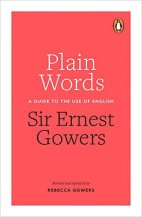
Congratulations, Rebecca Gowers …

… on the appearance of your revised and updated edition of Plain Words! We are delighted to have been given a copy, and look forward to reading it.

41ckpsxngel-_sx324_bo1204203200_

Posted in news, usage guide | Tagged | Leave a comment